DEWALT DW735X
13-inch, two-speed thickness planer kit
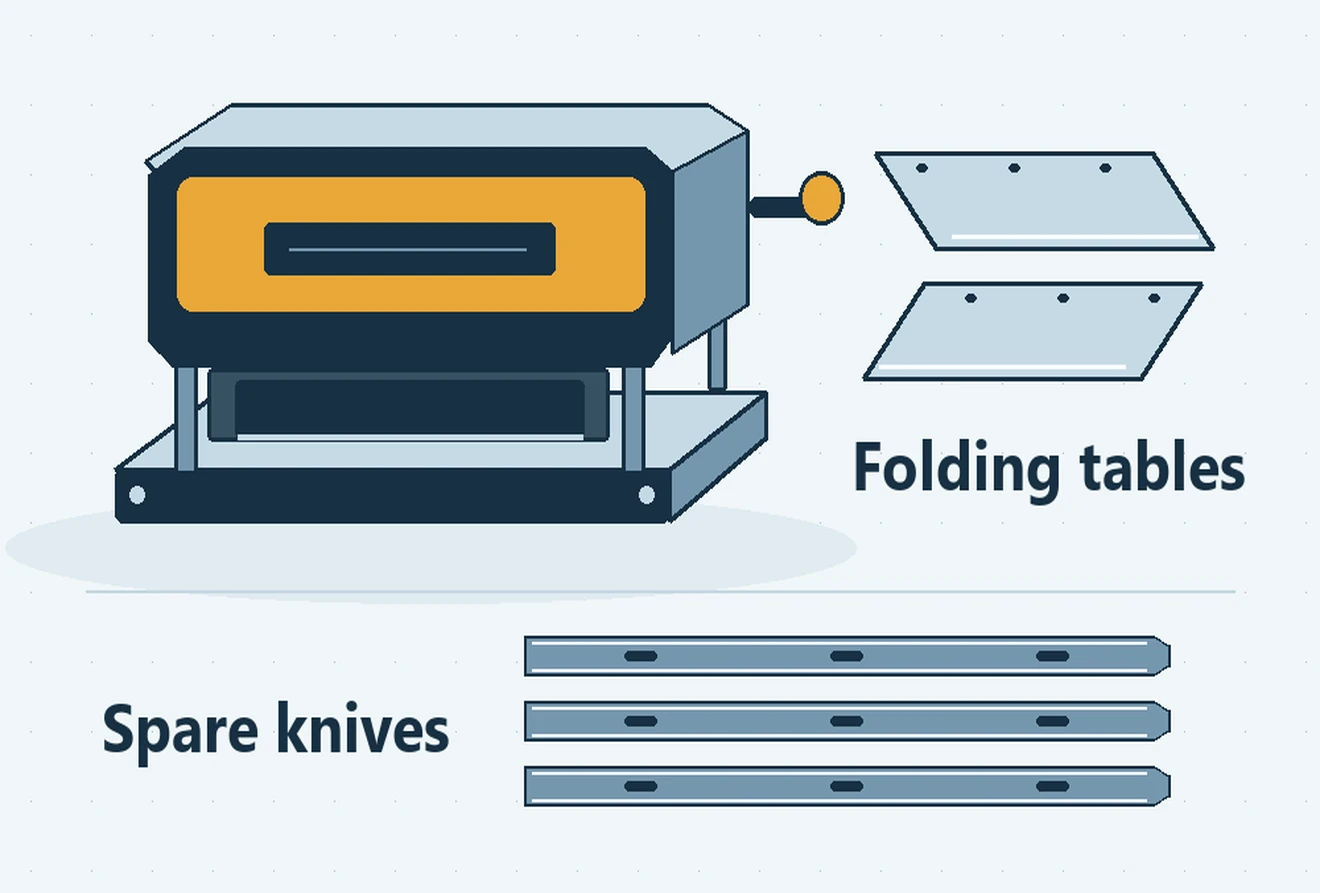
The X package pairs the DW735 benchtop planer with folding tables to support long boards and a second set of knives for the cutterhead.
- Motor
- 120 V · 15 A
- Feed settings
- 96 or 179 cuts per inch
- Maximum stock thickness
- 6 in.
DW735 vs. DW735X
Both boxes contain the same planer. If you already own the DW7351 tables and a spare set of DW7352 knives, the X kit duplicates those accessories.
| In the box | DW735 | DW735X |
|---|---|---|
| Two-speed planer | Included | Included |
| Folding infeed & outfeed tables | Sold separately | Included |
| Extra set of three knives | Sold separately | Included |
Planer specifications
- Feed speed for finishing
- 179 cuts per inch
- Feed speed for dimensioning
- 96 cuts per inch
- Cutterhead
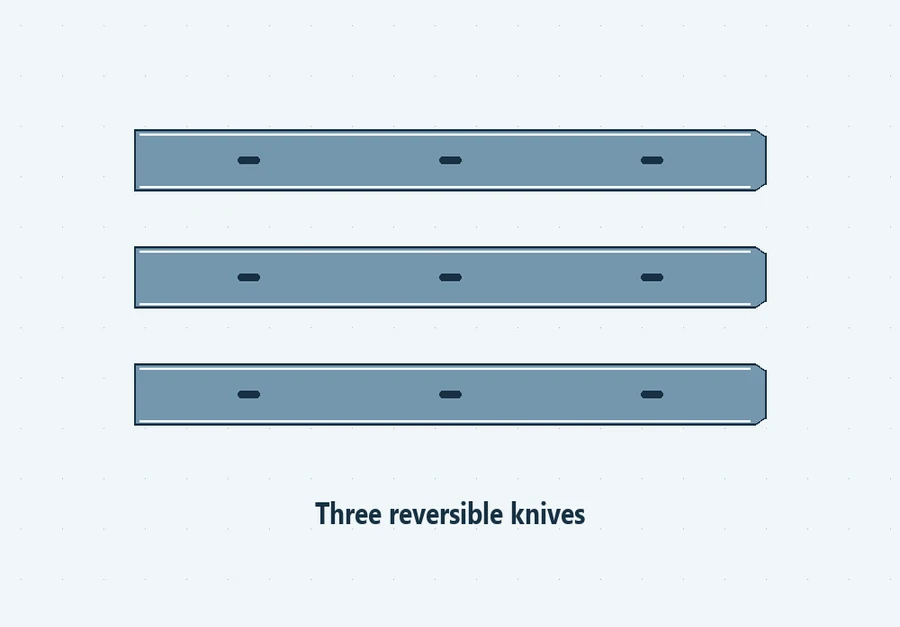
- 3 reversible knives
- Dust-collector hose
- 4 in. diameter
- Bench mounting holes
- 18⅛ × 13¾ in. on center
Will it fit in your shop?
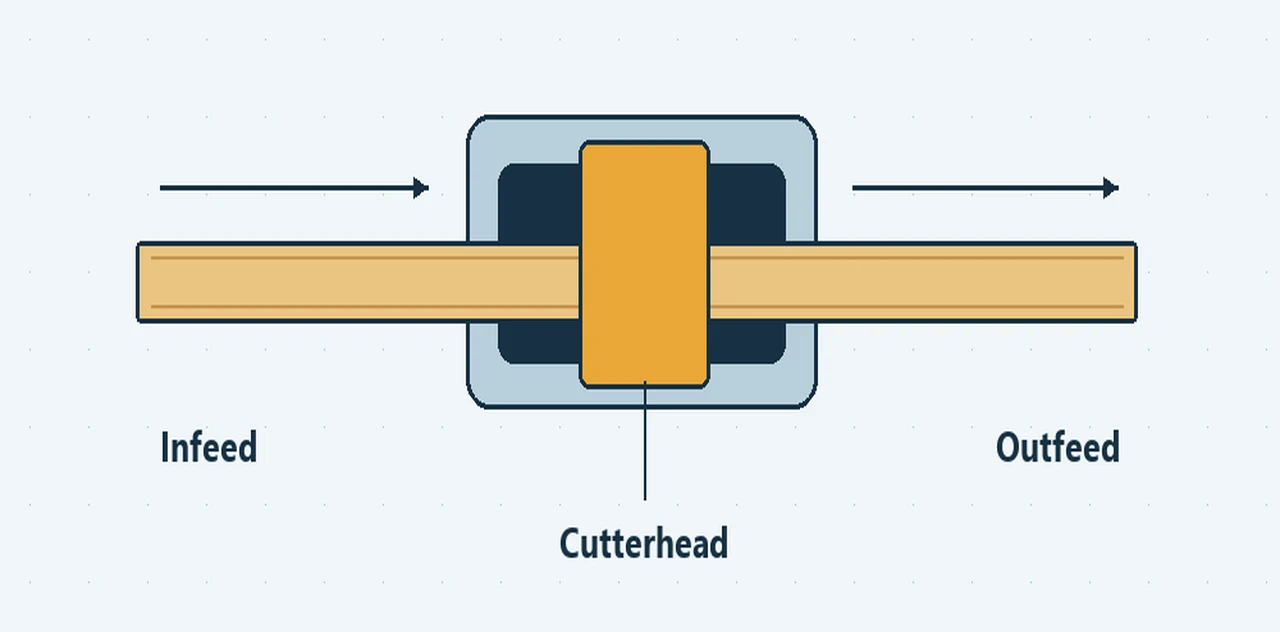
Measure from the cutterhead to the nearest wall along the feed path. A board needs its full length on both sides of the machine.
Common questions
Do I need to buy a stand?
The folding tables support the board. The planer itself needs a level, secure bench or a suitable stand. For a bench mount, check DEWALT’s mounting-hole dimensions.
Can I connect a shop vacuum?
DEWALT specifies a 4-inch dust-collector hose for the round outlet. The fan moves a large volume of chips, and the manual advises against a conventional shop vacuum.
What board sizes can I run through it?
Maximum stock thickness is 6 inches. Check the length, width and minimum thickness limits in the board-size safety instructions on printed page 3 before feeding a board.
Will it flatten a twisted board?
The planer follows the face resting on its bed. To make the two faces parallel, start with one flat reference face.